
The Future of Building is a series written by our CEO, Stephanie Gupana. The series explores how technical performance evolves when humans, systems, and AI share the same production loop. Each essay examines a different layer of performance, from cognitive to technical to organizational, and considers how teams can build responsibly in an AI-accelerated world.
It’s now 2026, and AI-assisted software development is moving from experimentation into standard practice. Large language models are now routinely used to generate code, refactor existing systems, explain unfamiliar codebases, draft tests, and support architectural decision-making. These capabilities are already embedded in many common development workflows across startups and large enterprises.
What’s changed is not that software is easier to build.
What’s changed is that it now takes very little time, money, or effort to generate something that looks correct or complete, even when it may not actually be either.
The loud story about AI and software is still “speed.”
But the quieter story—one that I predict will determine who stays valuable within organizations—is discernment.
Below are some tech predictions that have already been circulating, and the single thread tying them together: the winners won’t be the people who use AI the most. They’ll be the people who choose tools well, verify outputs, design guardrails, and say “no” to the wrong automation even when it’s flashy.
Prediction 1: “Vibe coding” turns into “vibe engineering,” and the job becomes orchestration
Forrester’s 2026 software development predictions basically call it: AI becomes the headline use case for software work, and what started as code generation moves toward full-cycle delivery: planning, testing, optimization, and coordination. They even frame the shift as moving from “jamming” to a “full orchestra,” with developers acting more like conductors than soloists. Forrester
Gartner echoes this from a different angle: its 2026 trend list lists AI-Native Development Platforms and Multiagent Systems right at the top. The implicit promise is that building will increasingly involve assembling AI-powered components into structured workflows, rather than manually coding every part of the system. Gartner
Discernment implication: The most valuable builders won’t be the ones who can prompt an agent to code something fast. Instead, they’ll be the ones who can evaluate whether the agent’s plan is structurally sound. Are the dependencies sane? Does the output match the business intent?
Prediction 2: Models commoditize; systems differentiate
IBM’s 2026 trend framing is unusually blunt. The competition won’t be on models so much as on systems: orchestration, routing, tool use, and integration. In other words, the differentiator becomes how well organizations stitch AI into real workflows. IBM
This matches what many teams are already discovering in practice: swapping one frontier model for another is rarely the hard part. The hard part is turning probabilistic outputs into reliable operations.
Discernment implication: If models become interchangeable, the durable advantage becomes the team’s ability to design the system around the model: instrumentation, evals, fallback logic, access controls, audit trails, and a very clear standard for what “ready” means.
Prediction 3: Compute and power constraints become product constraints
There’s a reason so many 2026 predictions keep drifting from “AI features” to “AI infrastructure.” Data center and energy constraints are becoming a limiting factor. Not an abstract macro trend, but something that impacts what software teams can realistically do.
Data Center Knowledge’s 2026 outlook frames the year as a test of energy limits, operations, and sustainability as AI workloads scale from pilots to production. DataCenterKnowledge
JLL’s 2026–2030 outlook similarly points to massive capacity expansion needs alongside grid constraints and energy innovation pressure. JLL
Even the more headline-y commentary is converging on the same point that grid capacity and power availability are becoming strategic bottlenecks (and major environmental concerns) for AI scale. Business Insider
Discernment implication: In a world where computing is expensive and sometimes scarce, “try everything” becomes a bad strategy. Teams that keep their jobs are the ones who can make clear, defensible tradeoffs. One I’m most interested in as a software CEO: when to pay for autonomy vs. keep humans in the loop.
Prediction 4: Trust becomes a feature, and provenance becomes infrastructure
Gartner puts Digital Provenance directly on its 2026 trend list, positioning it as a strategic response to AI-era authenticity problems by focusing on verifying the origin and integrity of software, data, and AI-generated content. Gartner
Security predictions from DigiCert go further, forecasting that cryptographic provenance and watermarking move from “nice to have” to “prerequisite” for distribution across major platforms and commerce contexts. digicert.com
This is the internet’s next phase: not just “content,” but “content with receipts”. Verifiable records of where something came from and how it changed.
Discernment implication: The new literacy is no longer going to be solely focused on spotting misinformation. It’s being able to answer:
“Where did this artifact come from?”
“What was modified, when, and by whom?”
“Can we prove it?”
Prediction 5: AI security and “guardrails” stop being optional because legal and operational risk rises
Gartner’s 2026 predictions include a clear warning: as AI systems are used in more real-world decisions, failures increasingly lead to legal and operational consequences. At the same time, Gartner highlights AI security platforms and confidential computing as growing priorities, signaling that organizations need stronger technical controls around how AI systems access data and operate. Gartner
You don’t have to agree with every specific forecast to see the pattern, but as AI is embedded deeper into products and workflows, the impact of mistakes starts to grow.
Discernment implication:
The job is no longer just to build AI systems but to set limits on them and keep track of the details.
- define what the system is allowed to do
- limit what it can access
- record what it does
- notice when behavior changes
- and know when to turn it off
Prediction 6: Enterprises shift from pilots to impact, and AI becomes a workflow decision
Deloitte’s framing captures the cultural change within companies where the question shifts from “what can we do with AI?” to “how do we move from experimentation to production deployments?” Deloitte
PwC similarly predicts a more enterprise-wide, top-down strategy in which leadership picks a few high-payoff workflows, then applies “enterprise muscle” (talent, technical resources, change management) to execute on them. PwC
In other words, 2026 is when many organizations stop treating AI like a sandbox and start treating it like an operational system.
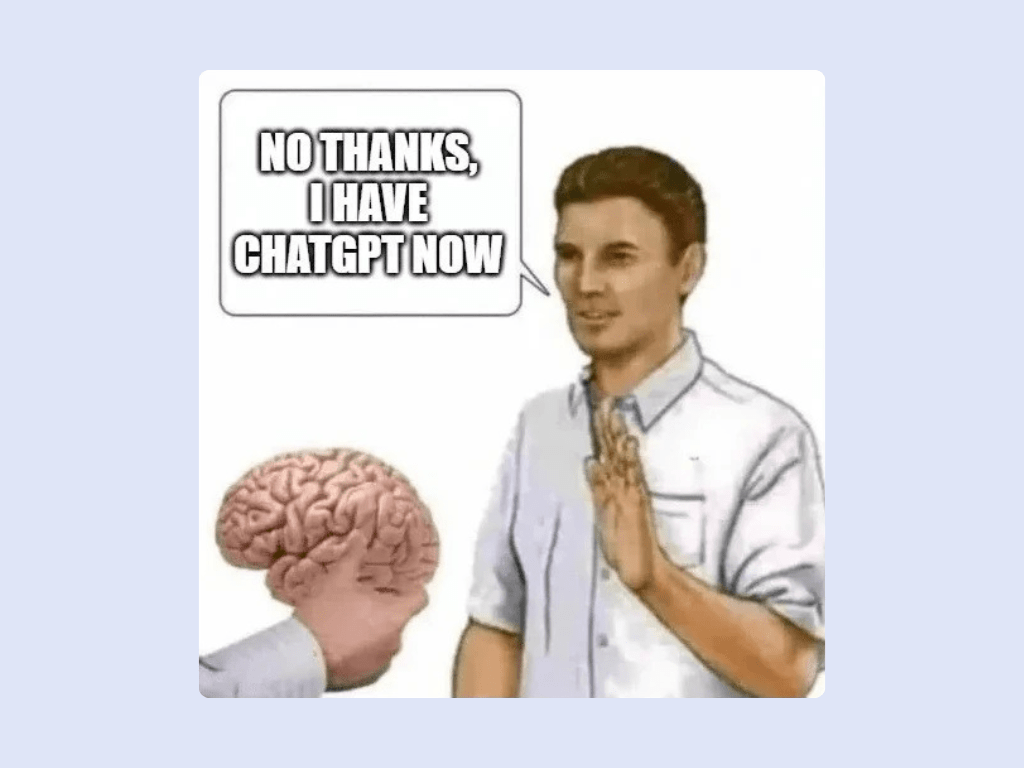
Discernment implication: This is where discernment becomes organizational and where jobs are going to be contingent on how well you can use your brain to challenge these LLMs.
Discernment is the durable advantage
Put all the predictions in a line, and a pattern appears:
- AI accelerates building.
- Systems and orchestration matter more than the model.
- Compute, power, and efficiency become constraints.
- Trust and provenance become infrastructure.
- Risk, security, and guardrails become core product concerns.
- Enterprises demand ROI.
All of it points to the same conclusion:
The future of building software is about making better choices.
We’re gonna have to, like it or not.
Yes, AI will make it easier to produce outputs. But that doesn’t mean those outputs are correct, safe, maintainable, compliant, or aligned with an end user’s real needs.
The human value of thinking isn’t disappearing.
It’s migrating upstream, into judgment.
Discernment is what will keep people employed.
Why?
Because organizations don’t pay for output. They pay for outcomes, and outcomes require someone who can tell the difference between a helpful assistant and a confident hallucination.
In 2026, the builders who win will not be the most automated. They’ll be the most discerning.
About Stephanie
Stephanie Gupana is the co-Founder & CEO of Ruoom®, an open-source software company. When she is not leading Ruoom, she runs Hi From Business Camp®, a performance coaching practice where she blends neuroscience, psychology, and evidence-based business strategy to help ambitious doers understand how their patterns of operating shape what they build. Connect with her on LinkedIn.